The Nepal Sanitation Tour is a strategic learning initiative that showcases diverse sanitation practices and initiatives being implemented across Nepal. Through first-hand observation, site visits, and direct interaction with municipalities and practitioners, the tour promotes experiential learning among sector stakeholders. It also encourages the adaptation, replication, and scaling of successful sanitation models within Nepal and beyond, where relevant and feasible.
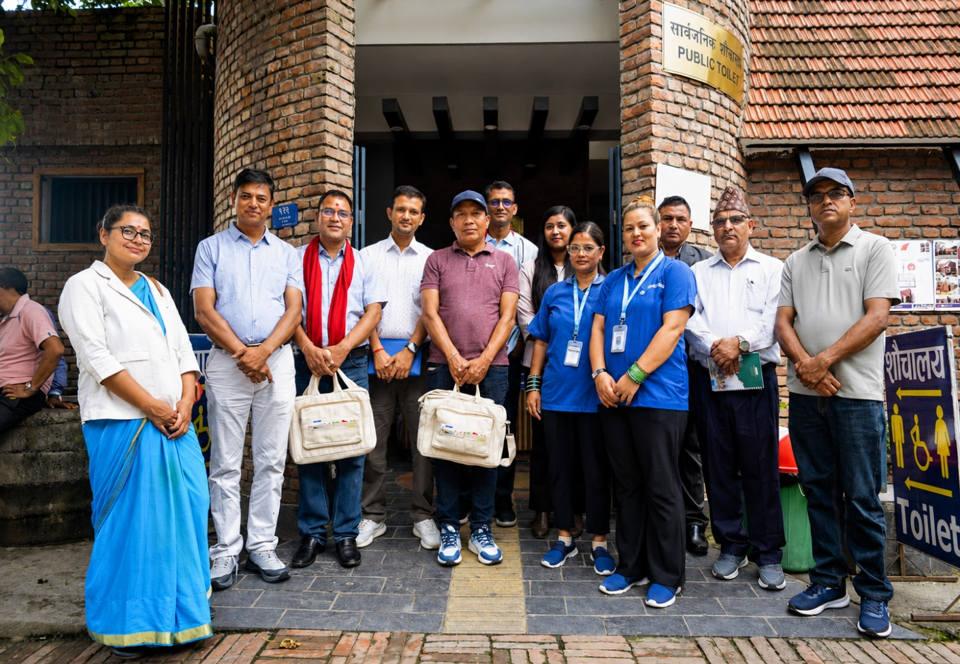
Participants of Nepal Sanitation Tour 2026
Building on this learning approach, Environment and Public Health Organization (ENPHO) organized the Nepal Sanitation Tour 2026 from 28–30 July 2026, bringing together nine Chief Administrative Officers from Urlabari Municipality, Agnisair Krishnasawaran Rural Municipality, Panchkhal Municipality, Banepa Municipality, Changunarayan Municipality, Simta Rural Municipality, Tila Rural Municipality, Kharpunath Rural Municipality, and Raptisonari Rural Municipality. The three-day tour provided municipal leaders with practical exposure to diverse sanitation initiatives while creating opportunities for peer learning, knowledge exchange, interaction with practitioners, and exploration of approaches relevant to their respective local contexts.
Over the three-day learning journey, participants visited Mahalaxmi Municipality, the Aerosan Public Toilet in Patan, the Guheswori Wastewater Treatment Plant in Kathmandu, Waling Municipality, and the Waling Faecal Sludge Treatment Plant. Together, these visits offered practical insights into different aspects of sanitation, ranging from municipal planning, governance, and information systems to inclusive public sanitation, wastewater treatment, faecal sludge management, and the long-term operation and sustainability of sanitation services.
Setting the Context for the Learning Journey
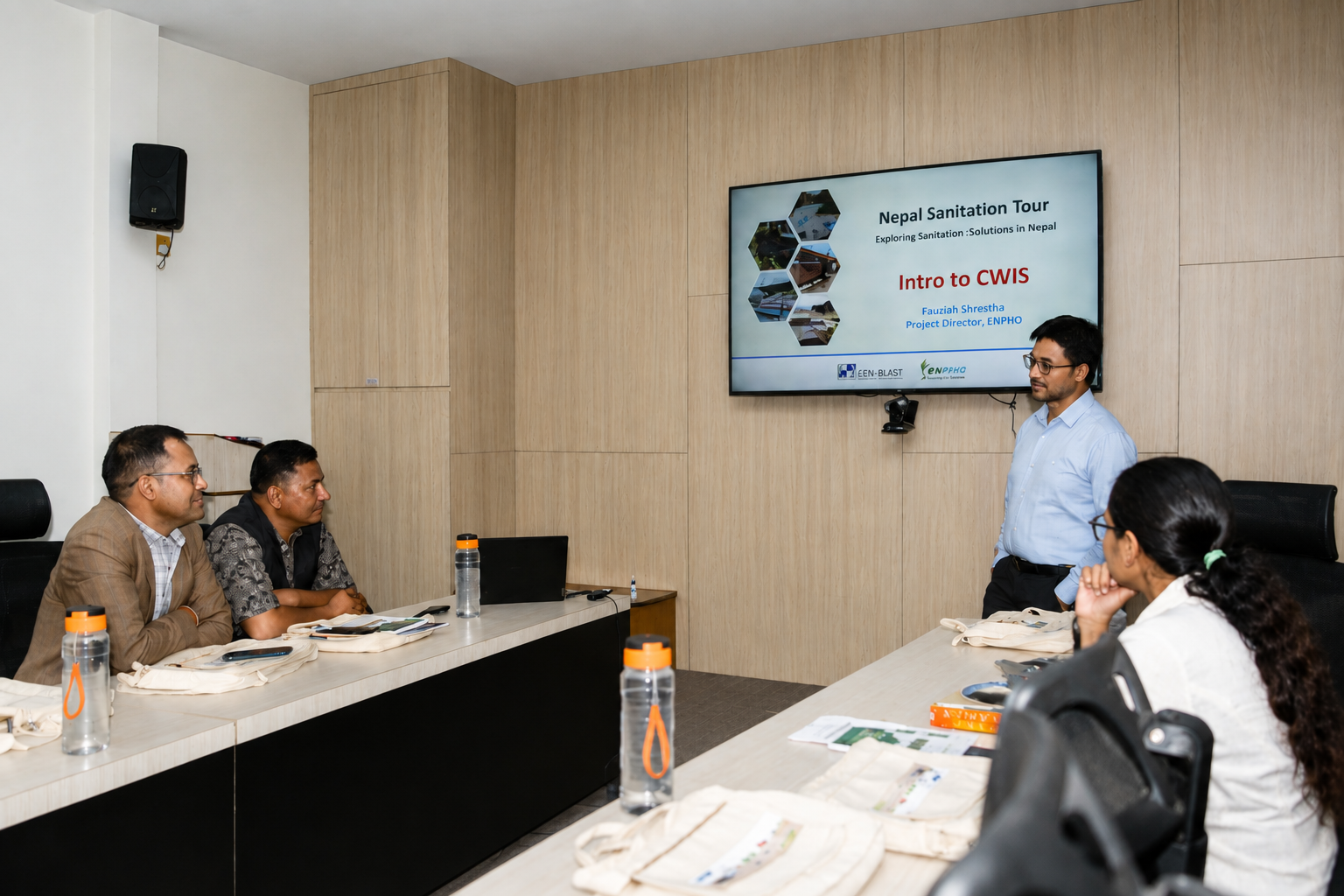
Briefing on the Citywide Inclusive Sanitation (CWIS) Approach
The tour began at ENPHO with a welcome and orientation session, where Mr. Ash Kumar Khaitu, Program Manager at ENPHO, introduced participants to the objectives, schedule, and overall purpose of the three-day learning journey. This was followed by an orientation on Nepal’s sanitation landscape and the Citywide Inclusive Sanitation (CWIS) approach by Mr. Rajendra Shrestha, Executive Director of ENPHO. The session established a common understanding of CWIS and highlighted the importance of collaboration, knowledge exchange, and sustained commitment in advancing inclusive and sustainable sanitation services.
Visit to Mahalaxmi Municipality: Learning from a Mentor City
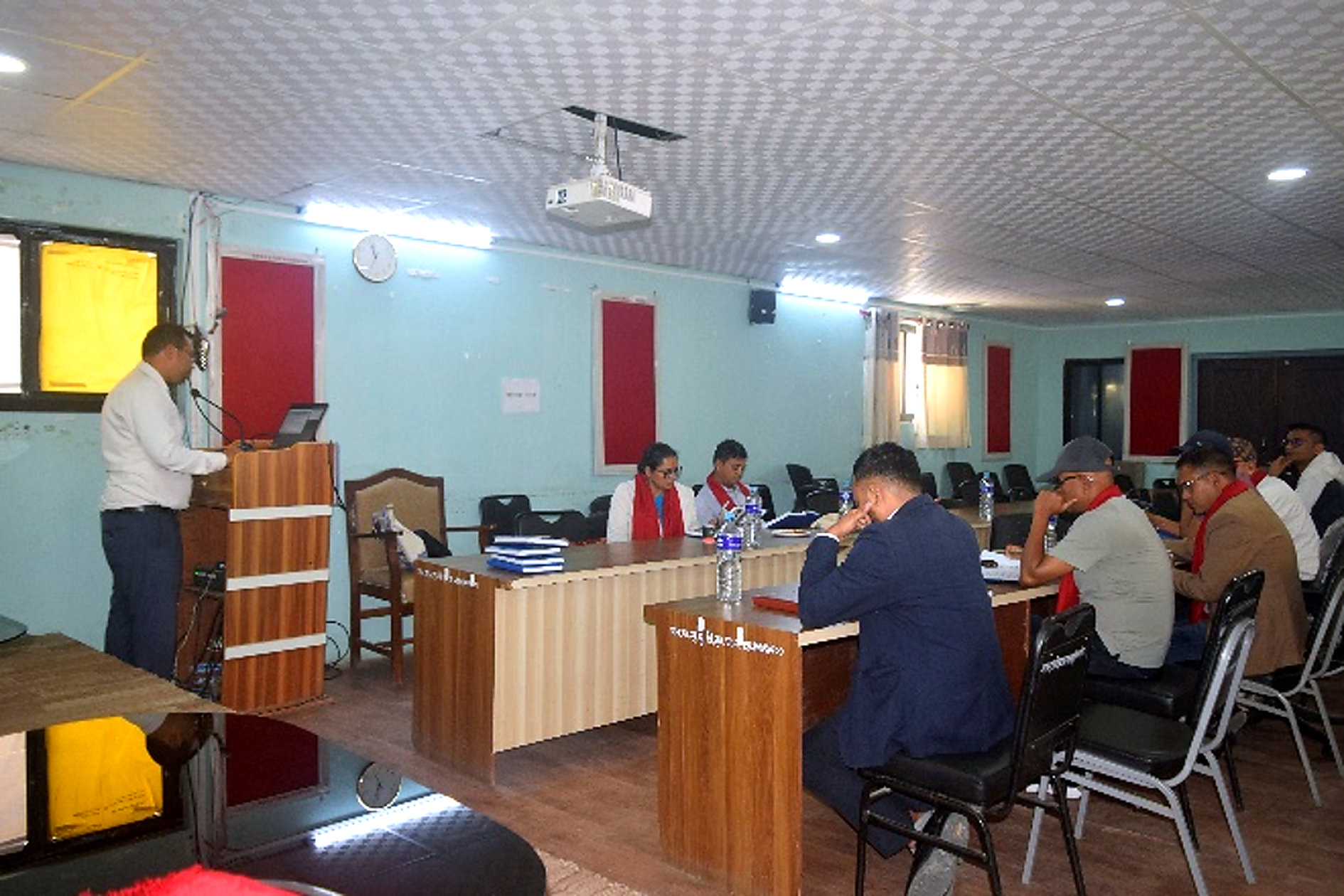
Sharing Sanitation initiatives by Mahalaxmi Municipality
The first field visit took participants to Mahalaxmi Municipality, one of Nepal’s sanitation mentor cities, where they explored how the municipality has been strengthening faecal sludge management and sanitation service delivery. The visit highlighted efforts to standardize septic tanks, advance FSM bylaws, strengthen stakeholder capacity, and revive the Lubhu Faecal Sludge Treatment Plant (FSTP). The municipality also shared how they are using a GIS-based sanitation application and the Integrated Municipal Information System (IMIS) to improve household-level sanitation tracking and support real-time planning and service delivery. Together, these initiatives illustrated how regulation, infrastructure, institutional capacity, and digital information systems are being combined to strengthen municipal sanitation management.
Visit to Aerosan Public Toilet: A Model of Inclusivity
Another site on the tour was the Aerosan Public Toilet in Patan, where participants explored an inclusive public sanitation facility managed through a public-private partnership (PPP) model. The visit highlighted design features that respond to the needs of diverse users, including women, children, and persons with disabilities, alongside approaches to financial and environmental sustainability. Interaction with the facility’s management team also provided participants with insights into its operation and management, prompting discussion on how similar inclusive public sanitation models could be adapted in their own municipalities where feasible.
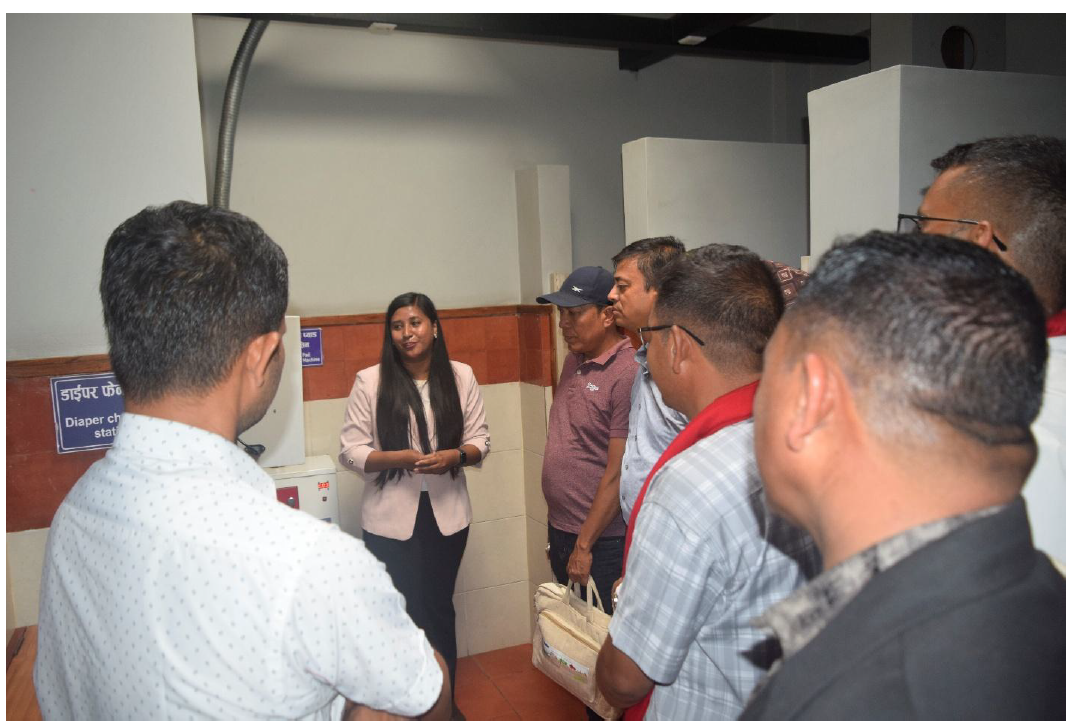
Ms. Archana Shrestha Explaining the Components of the Aerosan Public Toilet
Visit to Guheswori Wastewater Treatment Plant: Understanding Urban Wastewater Management
The final site visit on the first day was to the Guheshwori Wastewater Treatment Plant, one of Kathmandu’s major wastewater treatment facilities. The visit gave participants a closer look at the plant’s operation, including its treatment process, major components, capacity, service coverage, and environmental functions. It also highlighted the role of large-scale wastewater treatment in protecting public health and the environment in urban areas. A technical briefing on the facility’s operation and wastewater management challenges was followed by a guided tour, allowing participants to observe the treatment system in practice and gain first-hand insight into how the facility functions.
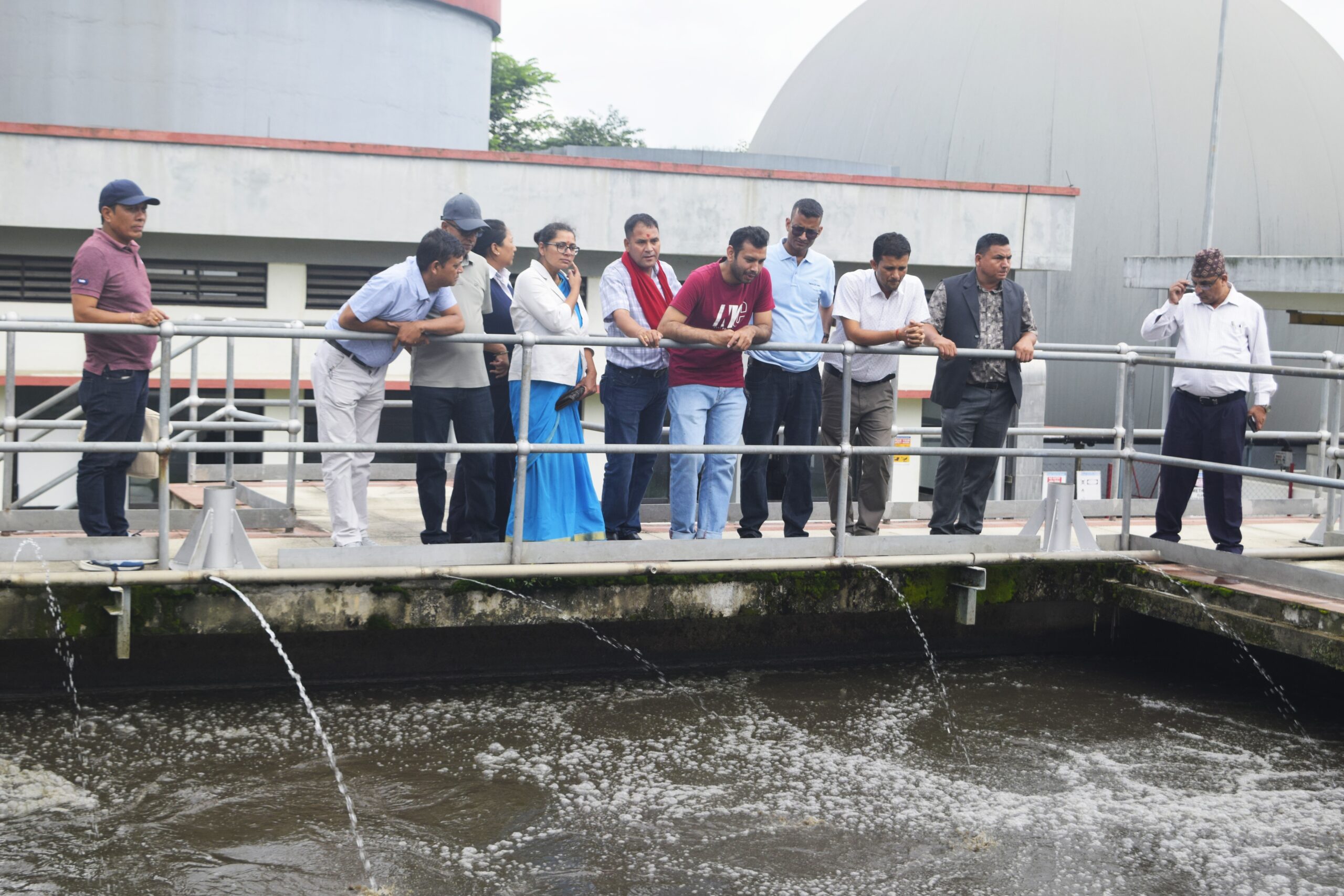
Participants exploring the functioning process of wastewater treatment plant
Visit to Waling Municipality: Learning from Local Leadership and Sustainable Sanitation Management
The learning journey continued to Waling Municipality, where participants explored how institutional planning, community engagement, local leadership, and ownership have contributed to the municipality’s sanitation progress. The visit offered insights into the municipality’s broader sanitation approach and the role of sustained local commitment in improving service delivery.
Participants also visited the Waling Faecal Sludge Treatment Plant (FSTP), where they observed the treatment process from sludge collection through treatment to final disposal and learned about the design and operation of the treatment units. Discussions went beyond the technical aspects to cover financial sustainability, maintenance responsibilities, long-term operational planning, and the roles of the municipality and community in sustaining the facility.
The visit further highlighted the importance of local ownership and accountability in sustaining sanitation infrastructure. Participants also showed interest in the idea of developing the FSTP premises as a public park, an approach that can help improve public perception of sanitation facilities and integrate them more positively into community spaces.
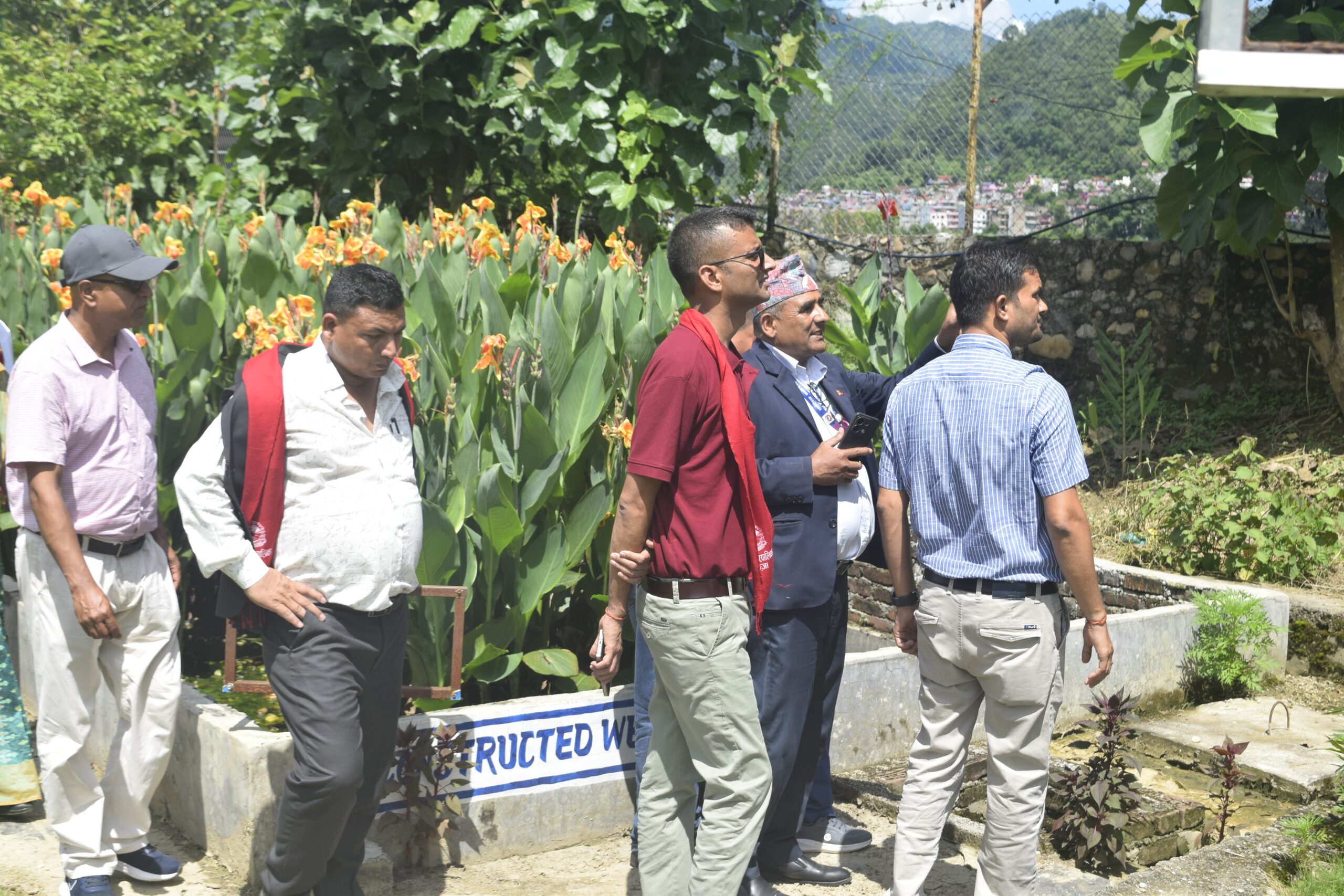
Briefing on the Components and Treatment Process of the Waling Faecal Sludge Treatment Plant
Reflection Session
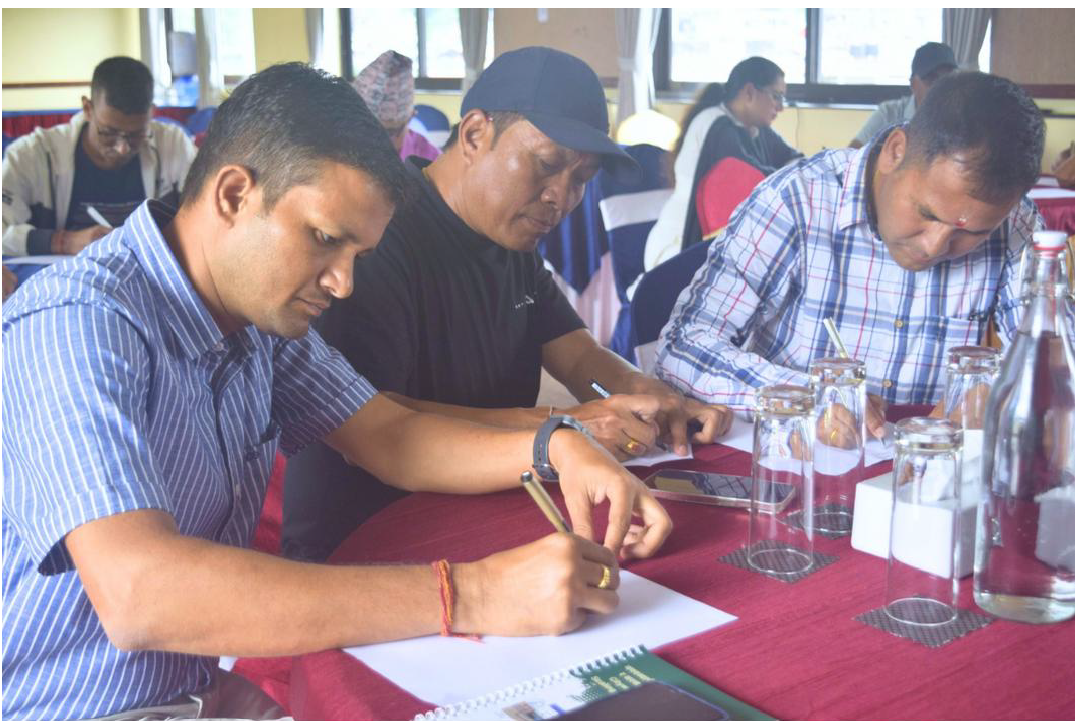
Participants engaged in a reflection activity
At the end of the tour, participants came together for a reflection session to consolidate their learning from the different site visits. Through a group activity, they shared key takeaways, identified challenges, and discussed which practices could be relevant to their own municipal contexts. The session also encouraged participants to consider how the knowledge and practical insights gained during the tour could be translated into actions to strengthen sanitation planning and service delivery in their respective municipalities.
From Learning to Local Action
The tour encouraged participants to look beyond exposure and consider how relevant practices could be adapted within their respective municipalities. Key areas of learning included FSM bylaws and regulatory systems, sanitation data and monitoring, inclusive public sanitation, wastewater and faecal sludge treatment, institutional coordination, community engagement, and long-term operation and maintenance.
As the three-day journey concluded, participants expressed their intention to take relevant lessons forward by strengthening sanitation plans and policies, exploring appropriate treatment systems, improving institutional coordination, and adapting feasible practices to their local contexts. Through the Nepal Sanitation Tour, ENPHO aims to inspire municipalities to turn practical learning into action, with the expectation that relevant approaches observed during the tour will be adapted and replicated to strengthen sanitation services in participating municipalities.
Voice from the participant
“Our municipality is currently in the process of establishing a Faecal Sludge Treatment Plant (FSTP), and this exposure visit provided valuable clarity on the overall process. Observing the plant’s operations, understanding its technical components, and learning about its day-to-day management have significantly strengthened our ability to plan for the establishment and sustainable operation of an FSTP in our local context.”
— Dhirendra Kumar Yadav, Chief Administrative Officer, Agnisair Krishnasawaran Rural Municipality
“This exposure visit provided valuable practical insights that will directly contribute to our municipality’s future sanitation planning. Drawing on the institutional coordination, community engagement, and management practices observed during the tour, we intend to develop a structured action plan to strengthen sanitation service delivery in Urlabari Municipality.”
— Abhaya Kumar Gupta, Chief Administrative Officer, Urlabari Municipality
As Nepal continues to strengthen its sanitation sector, initiatives such as the Nepal Sanitation Tour can help promote peer learning among municipalities and encourage the wider adoption of practical, locally relevant sanitation solutions. By connecting municipal leaders with functioning systems, experienced practitioners, and one another, the tour creates opportunities to translate shared learning into informed local action. Continued exchange and collaboration can support municipalities in adapting feasible approaches to their own contexts and contribute to more inclusive, sustainable, and effectively managed sanitation services across Nepal.