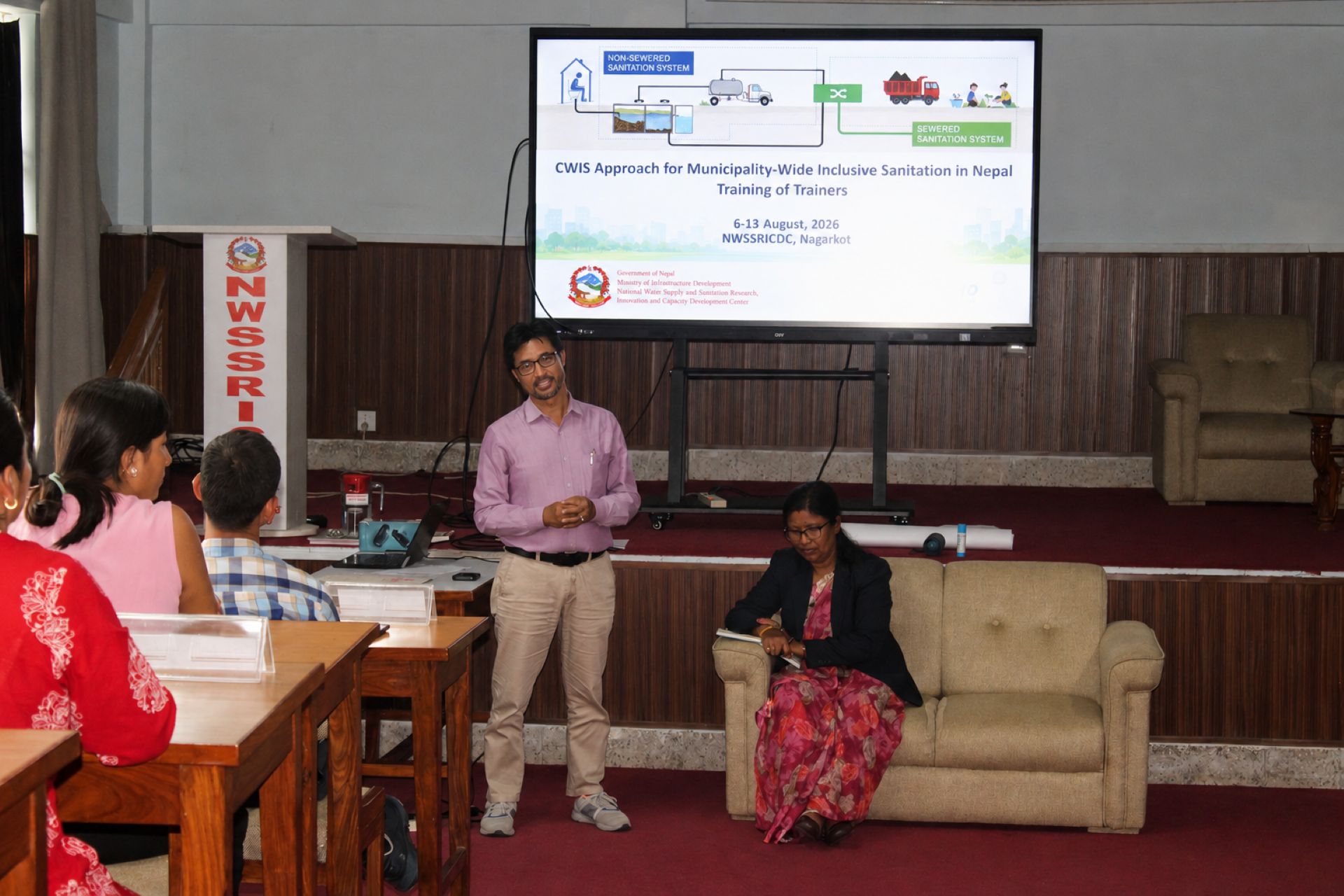
Environment and Public Health Organization (ENPHO) and the National Water Supply and Sanitation Research, Innovation and Capacity Development Center (NWSSRICDC) jointly organized an eight-day Citywide Inclusive Sanitation Training of Trainers (CWIS ToT) from 6–13 August 2026 at NWSSRICDC, Nagarkot. As the third series of the CWIS ToT, to create a pool of resource persons with enhanced knowledge of the CWIS approach and strengthened training delivery skills to further cascade CWIS knowledge and practices.
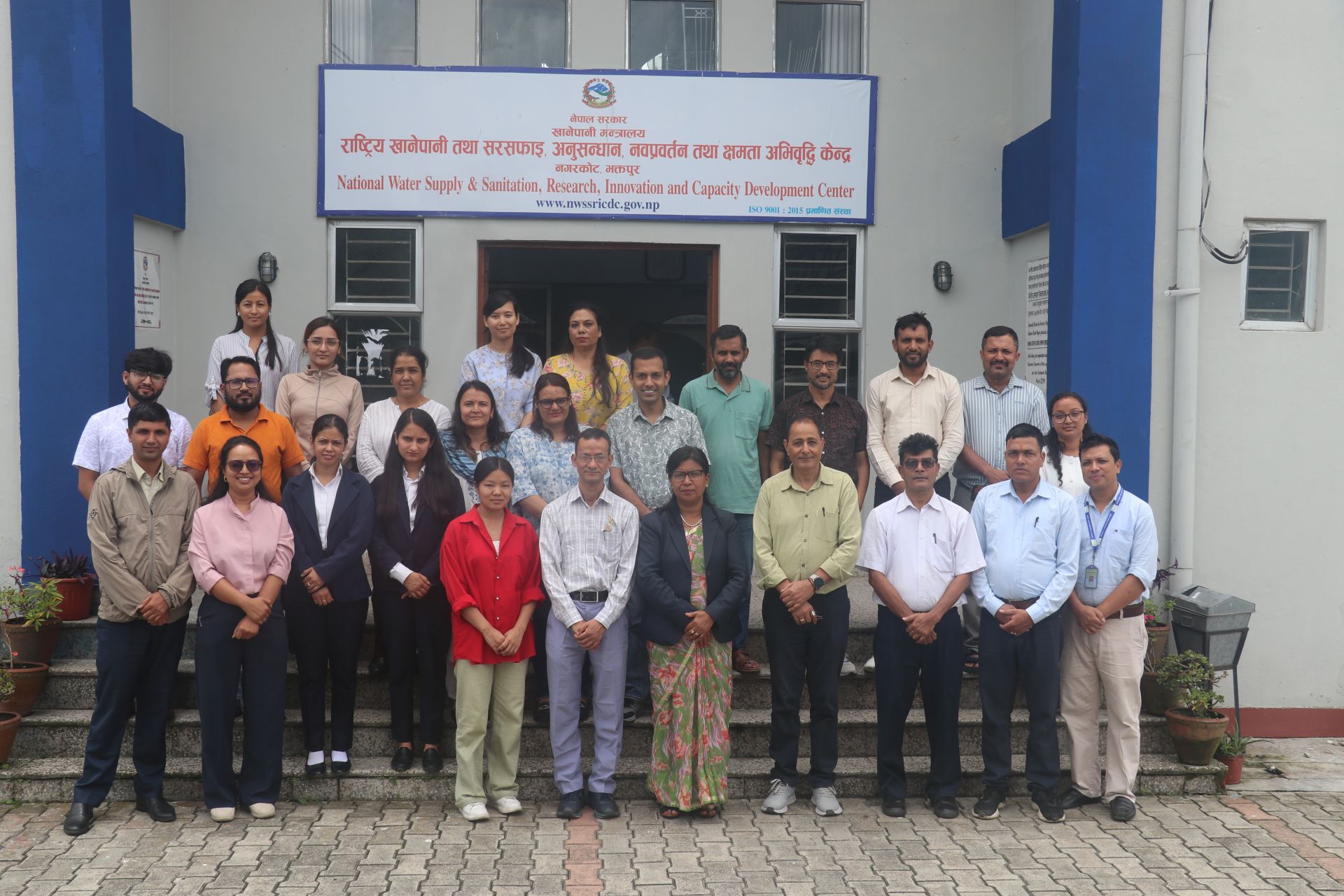
Group photo of CWIS ToT participants.
The training brought together 17 participants, including 8 female and 9 male participants from federal government agencies, development partners, I/NGOs, and private-sector organizations, including representatives from DWSSM and DUDBC. The eight-day programme combined technical sessions, practical exercises, group work, and experience sharing to deepen participants’ understanding of the CWIS framework, covering key CWIS service outcomes and functions, including equity, safety, sustainability, responsibility and accountability, and resource planning and management, supported through practical exercises and group work.
Day 1 – Setting the Foundation for CWIS
The first day of the training laid the groundwork for the eight-day learning program by introducing participants to Nepal’s sanitation context and the fundamental principles of Citywide Inclusive Sanitation (CWIS). The program began with a formal opening session facilitated by Chandra Shova Khaitu. Rajendra Shrestha, Executive Director of ENPHO, and Meena Shrestha, Executive Director of NWSSRICDC, delivered the opening remarks, while Chet Narayan Shrestha, Engineer at NWSSRICDC, welcomed the participants. The opening session was followed by the collection of participants’ learning expectations, establishment of group agreements, and administration of a pre-test.
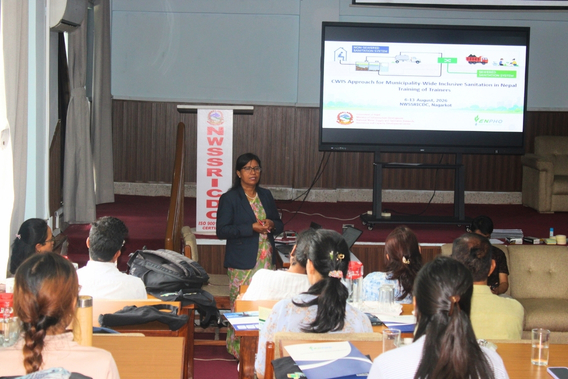
A opening remarks by Meena Shrestha, Executive Director of NWSSRICDC
The technical sessions began with a presentation on Sanitation Status and the Sanitation Service Chain, facilitated by Rajendra Shrestha. The session provided participants with an overview of the existing sanitation situation, service-chain components, and key challenges related to sanitation service delivery. Building on this understanding, Subash K C facilitated the Introduction to CWIS session, familiarizing participants with the core concepts of CWIS and its importance in achieving inclusive, equitable, and sustainable urban sanitation services.
The day concluded with a session on Technological Awareness, facilitated by Yogita Rajchal. This session introduced participants to key technological considerations in sanitation service delivery and helped prepare them for more detailed discussions on CWIS concepts, approaches, and applications in the following days.
Day 2 – Exploring Equity within the CWIS Approach
The second day of the training began with a reflection on Day 1, facilitated by Subash K C. Using the Assignment Book as a learning tool, participants revisited key concepts from the previous day, reflected on their learning, and clarified areas of understanding before proceeding to the technical sessions.
The day continued with a session on Technological Awareness, facilitated by Yogita Rajchal. Building on the previous day’s discussion, the session further strengthened participants’ understanding of the role and relevance of different sanitation technologies and emphasized the importance of selecting and applying appropriate technological options within sanitation service delivery. The training then shifted its focus to Equity as a CWIS Service Outcome, facilitated by Srijana Karki. The session highlighted the importance of ensuring that sanitation services are accessible and responsive to the needs of all population groups, particularly those who may otherwise be underserved or excluded. It also provided a conceptual foundation for the practical exercises that followed.
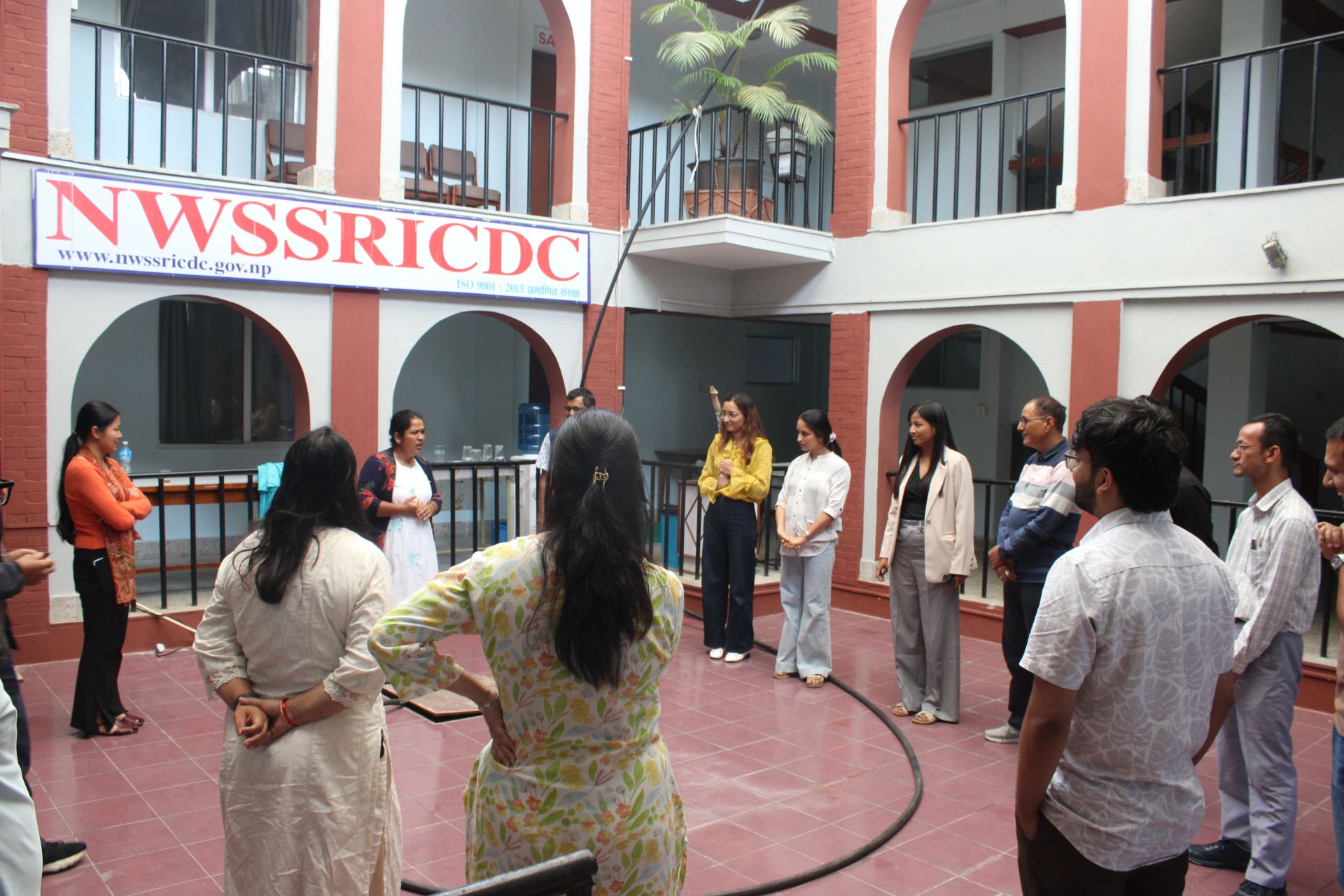
Energizer session with participants
Participants further explored the topic through the Equity – In Practice session, facilitated by Chandrashova Khaitu, followed by dedicated group work. These activities enabled participants to relate the concept of equity to real-life sanitation scenarios, discuss challenges within different local contexts, and strengthen their ability to identify and incorporate equity considerations into sanitation planning and service delivery.
Day 3 – Strengthening Understanding of Safety and Accountability
The third day began with a reflection on Day 2, facilitated by Subash K C, allowing participants to revisit key learnings from the previous day and connect them with the next set of CWIS concepts. The technical session then focused on Safety as a CWIS Service Outcome, facilitated by Bipin Dangol, highlighting how sanitation services should minimize health and environmental risks throughout the sanitation service chain. This was followed by Safety – In Practice and group work, facilitated by Buddha Bajracharya, where participants explored the practical application of safety considerations in different sanitation situations.
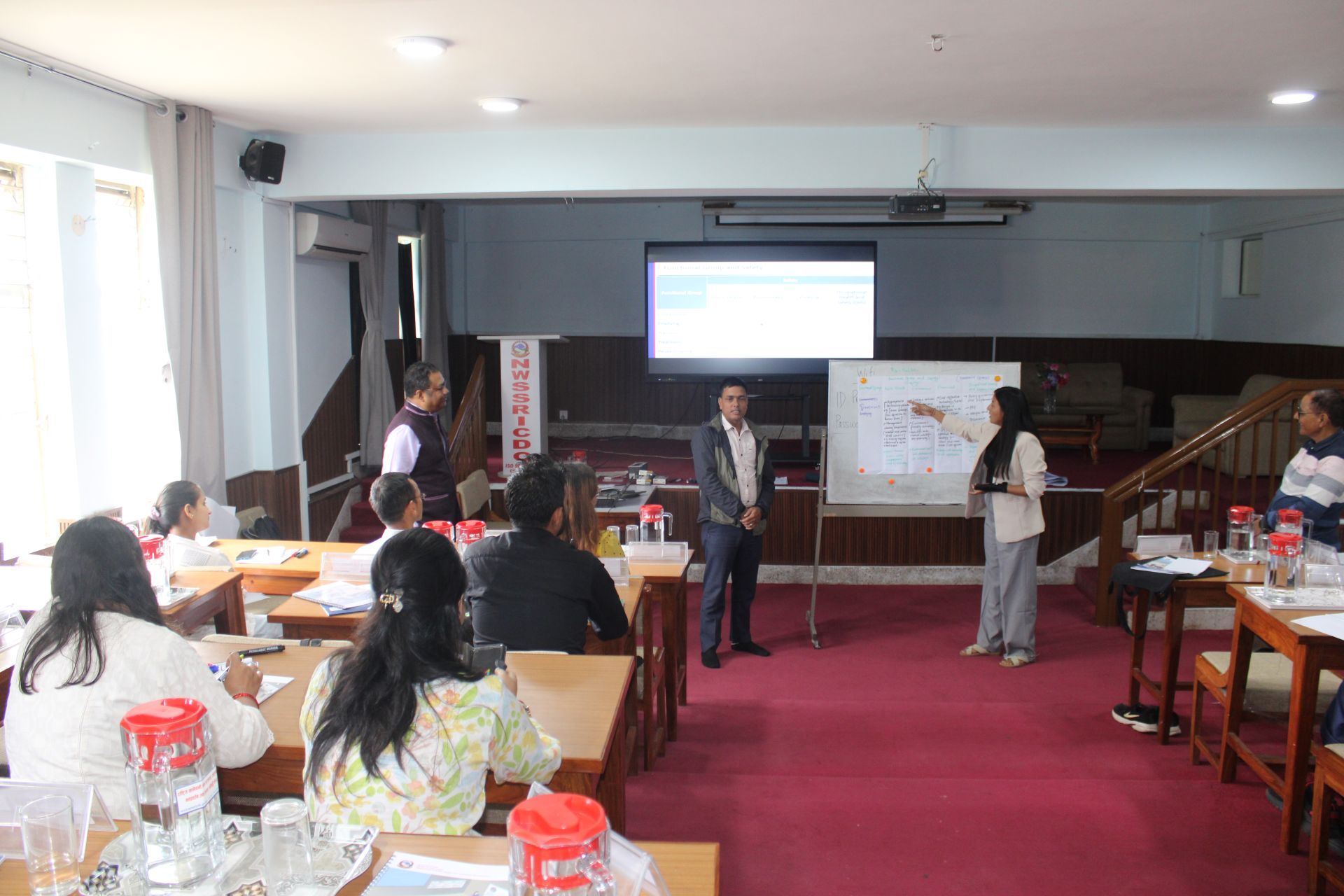
A presentation sharing by the participant
The latter part of the day introduced the CWIS function of Responsibility and Accountability, facilitated by Yogendra Chitrakar. The session guided participants through the roles and responsibilities of different institutions and stakeholders involved in sanitation service delivery. A subsequent practice session, facilitated by Subash K C, further reinforced the concept by encouraging participants to relate responsibility and accountability to practical institutional and service-delivery contexts.
Day 4 – Exploring Resource Planning, Management and Sustainability
The fourth day introduced participants to the CWIS function of Resource Planning and Management (RPM), led by Prabhat Shrestha, showing how financial, human, institutional, and technical resources need to be planned and managed to support effective sanitation services. Through the technical session, practical exercise, and group work, participants examined how resource-related decisions influence the performance and continuity of sanitation systems and applied the concepts to practical situations.
The day also introduced Sustainability as a CWIS service outcome facilitated by Luna Kansakar, helping participants consider how sanitation services can remain functional and effective over time. The session provided a foundation for examining the long-term institutional, financial, technical, and environmental considerations that support sustainable sanitation service delivery, which was further explored through practical exercises on the following day.
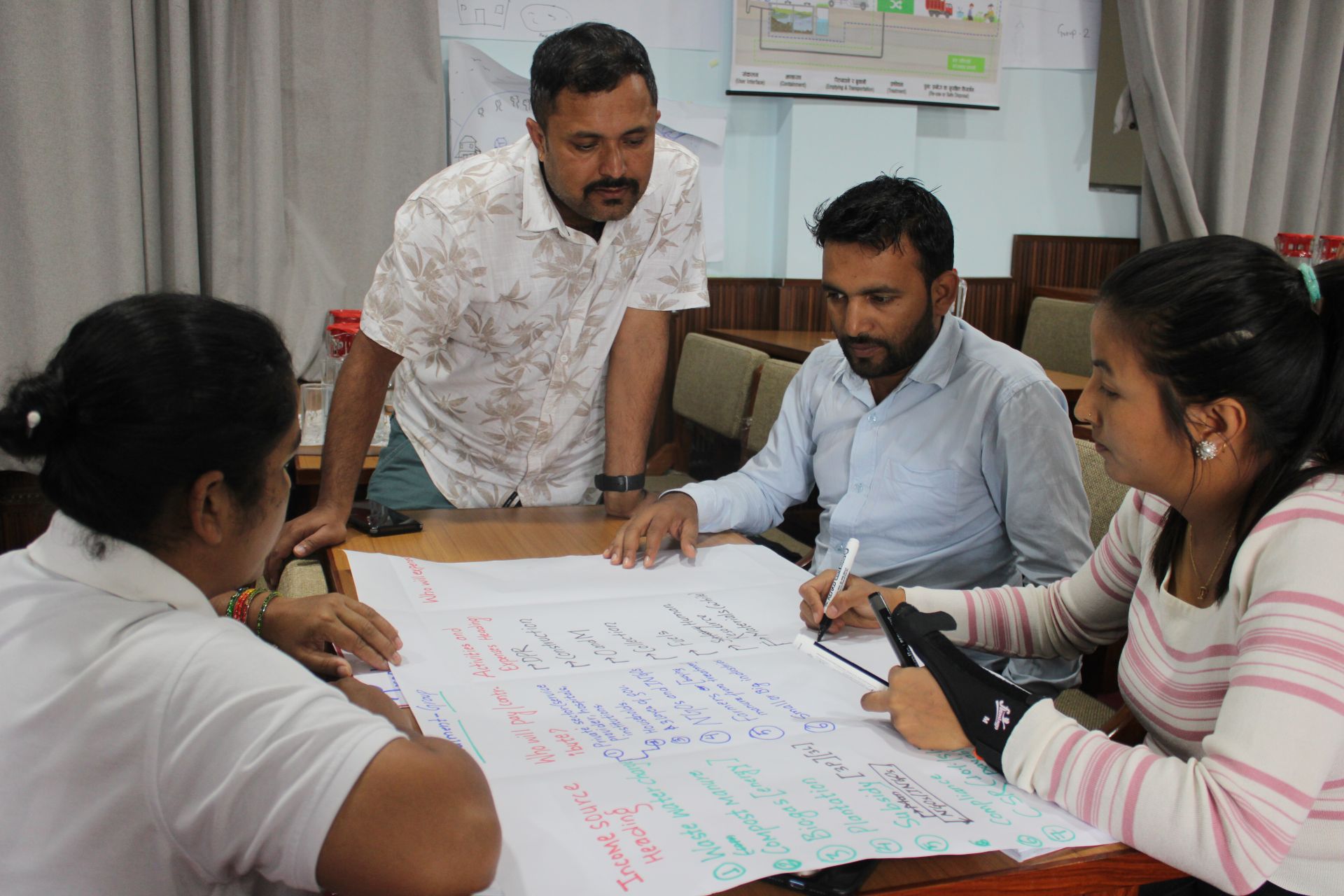
Participants engaged in group work
Day 5 – Applying Sustainability in Practice
The fifth day shifted the learning from concepts to application, with participants working through practical exercises and group discussions on Sustainability. The sessions encouraged them to examine how institutional, financial, technical, and environmental considerations influence whether sanitation services can remain functional and effective over time.
The day also explored the Enabling Environment, facilitated by Chandrashova Khaitu, along with CWIS and Private Sector Engagement, led by Mingma Gyalgen Sherpa. The sessions highlighted the importance of supportive institutional arrangements, clear stakeholder roles, and strong partnerships in advancing effective CWIS implementation and sustainable sanitation services.
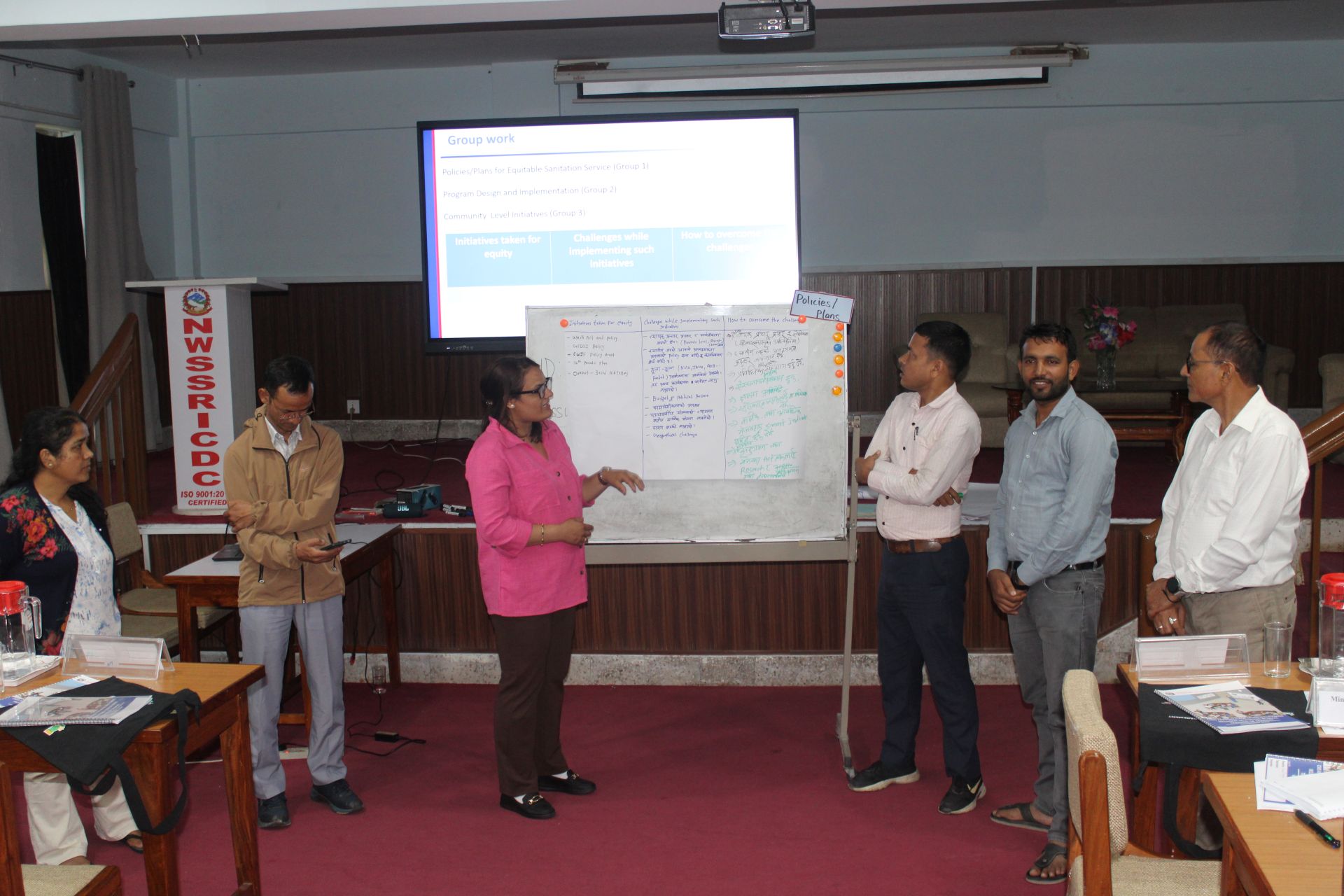
Group work presentation shared by participants.
Day 6 – Connecting CWIS with Planning, Monitoring and Tools
The sixth day focused on linking the CWIS approach with broader planning and monitoring processes. Yasodha Shrestha facilitated the session on Integrating CWIS in the Project Cycle, showing how CWIS considerations can be incorporated into different stages of project planning and implementation. This was followed by a session on Monitoring Benchmark and NWASH, facilitated by Rajit Ojha, which introduced participants to approaches and systems used for monitoring sanitation progress.
The day also introduced participants to key CWIS tools and platforms. Maharshi Rajbhandari led the session on IMIS, while Jagam Shrestha facilitated the session on SFD and CSDA. These sessions gave participants hands-on familiarity with practical tools that support sanitation data management, assessment, planning, and evidence-based decision-making within the CWIS framework.
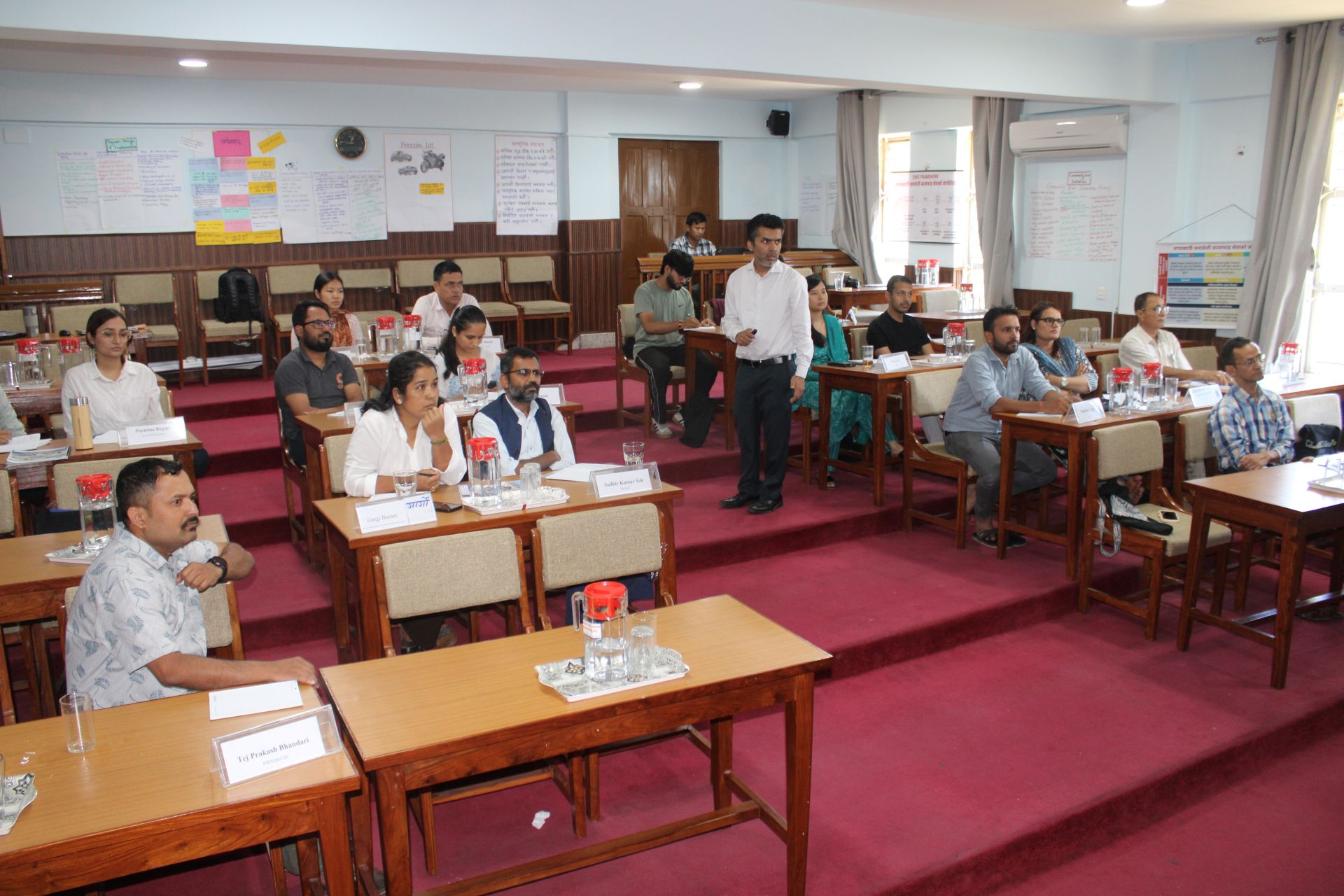
A session facilitated by Mr. Rajit Ojha
Day 7 – Learning Through Exposure and Practice
The seventh day provided participants with an opportunity to move beyond the classroom through an exposure visit, allowing them to observe sanitation practices and connect the CWIS concepts discussed during the training with practical implementation. Participants were taken to Guheshwori Wastewater Treatment Plant, Nepal’s largest wastewater treatment facility. During the visit, participants observed large-scale wastewater treatment processes and discussed operational management, treatment efficiency, and opportunities for resource recovery. The field exposure helped them connect CWIS concepts and classroom discussions with practical sanitation systems in operation, while reflecting on how similar approaches could be adapted to their own institutional and local contexts. The day also included sessions on Effective Learning, facilitated by Shobha Rana, and Effective Training, facilitated by Subash K.C, which strengthened participants’ understanding of learning approaches, facilitation techniques, and methods for effectively transferring CWIS knowledge to others.
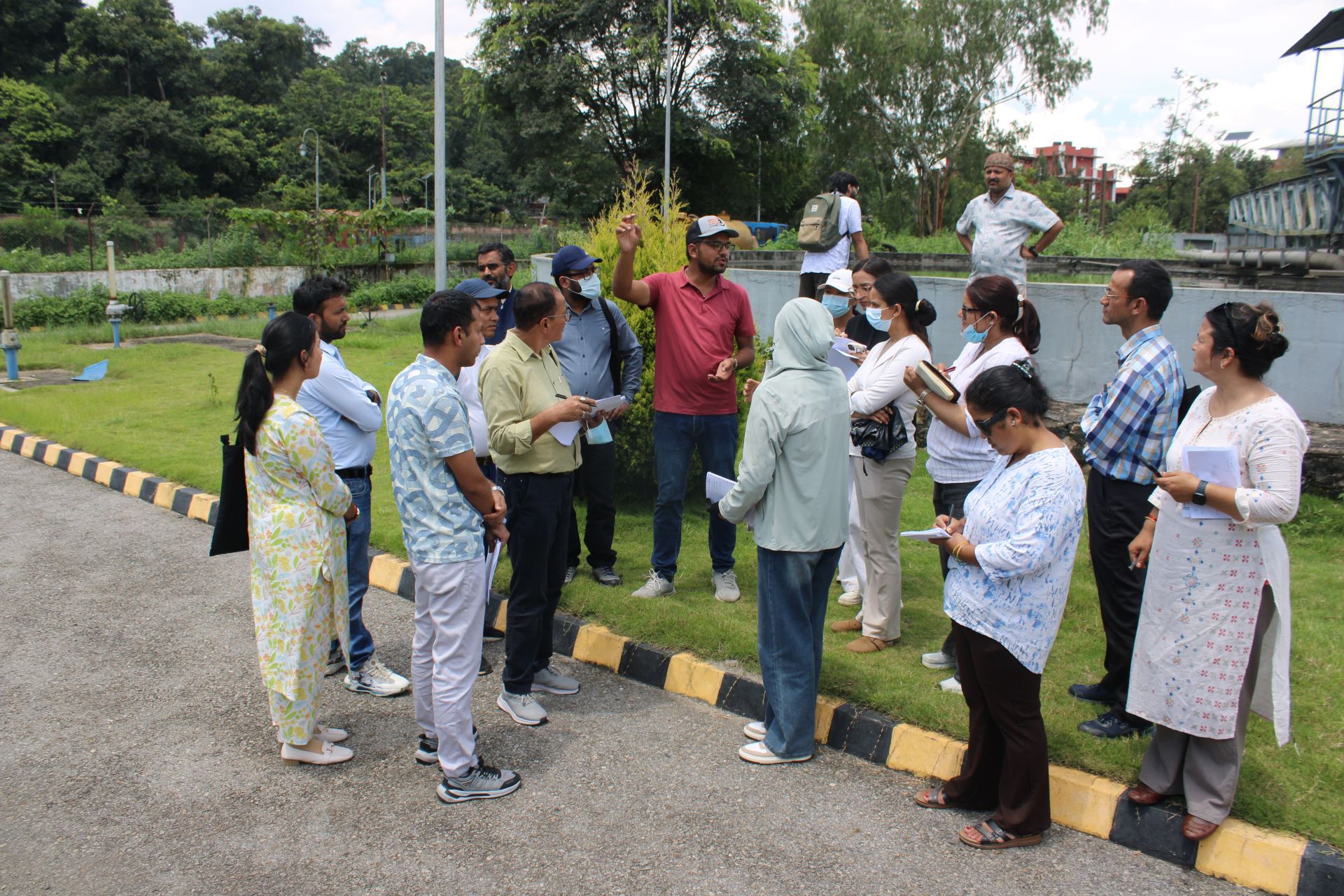
Participants engaged in a discussion during a field visit to Guheshwori Wastewater Treatment Plant.
Day 8 – Training Practice and Closing
The final day focused on session delivery practice, providing participants with an opportunity to apply the knowledge and facilitation skills developed throughout the eight-day ToT. Participants practiced delivering CWIS sessions, strengthening their confidence, presentation skills, and ability to communicate CWIS concepts effectively to different audiences.
The training concluded with a closing session, during which participants revisited their learning expectations, completed the post-test, and provided their final training evaluation. Participants also shared their reflections and experiences from the program. Rajendra Shrestha, Executive Director of ENPHO, and Meena Shrestha, Executive Director of NWSSRICDC, delivered the closing remarks, marking the completion of the eight-day learning journey. Certificates were then presented to the participants in recognition of their successful completion of the CWIS ToT.
A closing remark by Mr. Rajendra Shrestha, Executive Director, ENPHO
Assessing Learning Progress
To assess changes in participants’ knowledge and understanding, a digital pre- and post-training assessment was conducted. The results showed an overall improvement in participants’ knowledge of the CWIS approach, its service outcomes, functions, tools, and practical application. The comparison between the pre- and post-assessment reflected the progress made during the eight-day learning process and demonstrated the value of combining technical sessions with practical exercises, group work, field exposure, and training delivery practice.
Participants’ Voices
“The training gave me a much clearer understanding of the CWIS approach, particularly the principles of equity, safety, sustainability, responsibility and accountability, and resource planning and management. At the same time, I feel there is still much more to learn about CWIS. This training has increased my awareness and understanding of the sanitation service approach and provided a strong foundation for further learning. I believe the organizers will continue to support us in strengthening our knowledge and skills in CWIS program planning and implementation in the future.”
-Mr. Sudhir Kumar Sah, SDE – DWSSM
“Previously, my work focused mainly on school WASH and inclusive education programs. After participating in this ToT, I have gained greater confidence and understanding of safely managed sanitation. The practical exercises, group work, and exposure visit helped me connect technical concepts with real sanitation systems. I plan to apply this learning to promote more inclusive and sustainable sanitation practices within my organization and to encourage the use of CWIS tools and approaches in future programs and projects.”
-Ms. Gargi Basnet, Chairperson – REMREC
Following the training, participants are expected to put their learning into practice within their respective institutions and working areas. As CWIS resource persons, they will support the review of existing programs through an equity and inclusion lens, facilitate CWIS sessions for colleagues and stakeholders, share knowledge and learning, and promote the integration of CWIS principles into ongoing projects and programs. They are also expected to strengthen coordination and inclusive stakeholder participation and engage with decision-makers to raise awareness of CWIS and sanitation priorities. Through these efforts, the participants will help cascade CWIS knowledge and contribute to the wider application of inclusive, safe, accountable, and sustainable sanitation approaches in Nepal.